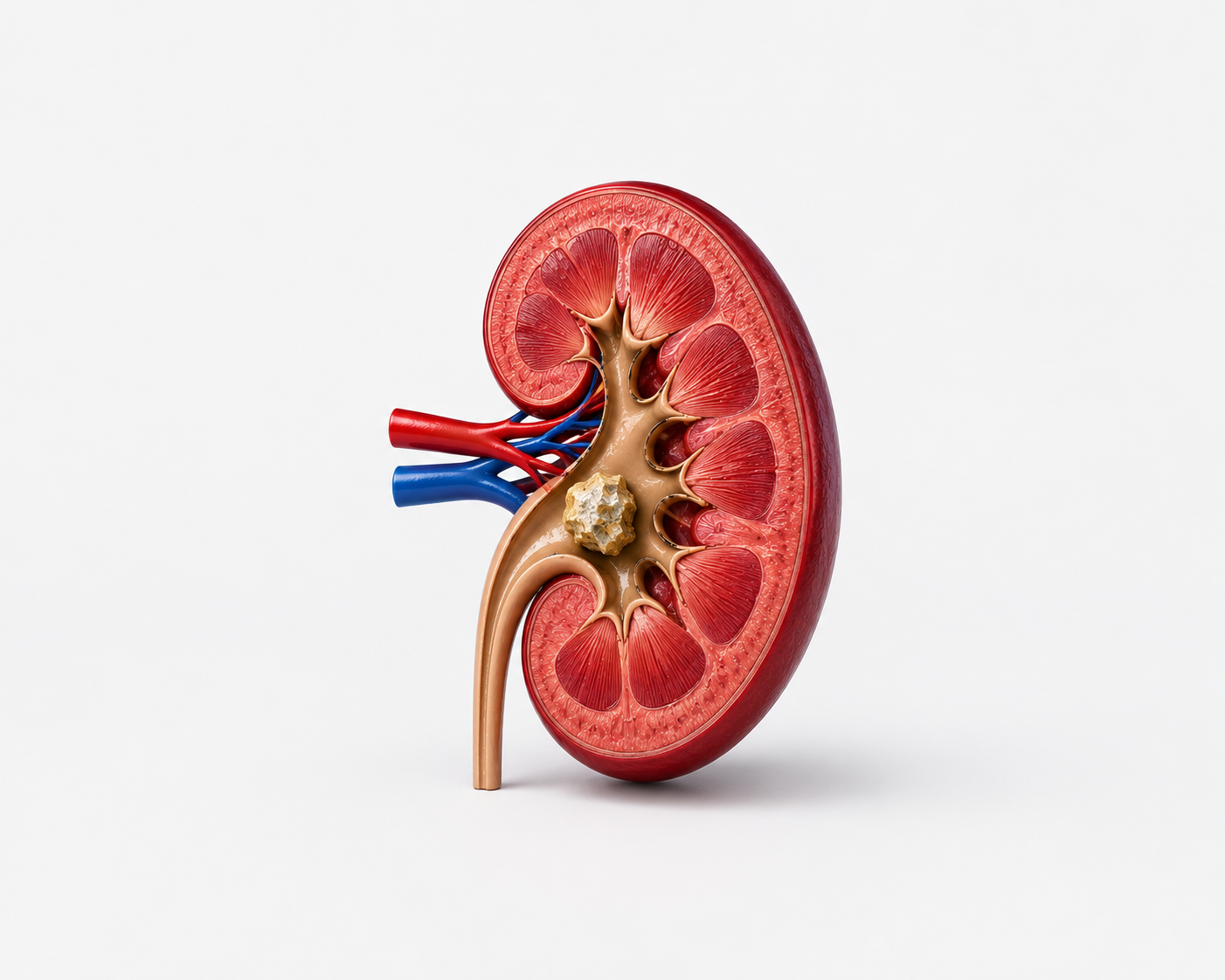
Kidney stones are hard, crystal-like deposits that form inside the kidneys when certain substances in urine become concentrated and form crystals. Some stones are small enough to pass through the urinary tract naturally, while larger stones may cause pain or require medical treatment.
Kidney Stones at a Glance
Common Causes
Kidney stones develop when the concentration of certain substances in urine becomes high enough for crystals to form.
- Not drinking enough fluids
- High concentration of certain minerals in urine
- Certain dietary habits
- Family history of kidney stones
- Previous history of kidney stones
- Certain medical conditions
Common Symptoms
Symptoms depend on the size and location of the stone and whether it blocks the urinary tract.
- Sharp pain in the side or back
- Pain that may move toward the groin
- Pain or burning during urination
- Blood in the urine
- Nausea or vomiting
- Frequent or urgent urination
When Should You Seek Medical Attention?
Severe or persistent pain, fever or chills, difficulty passing urine, blood in the urine, or symptoms that may indicate an infection should be evaluated promptly by a healthcare professional.
Types of Kidney Stones
Kidney stones can be made from different substances. Identifying the type of stone can help healthcare professionals understand possible causes and recommend appropriate preventive measures.
Calcium Stones
Calcium stones are the most common type of kidney stone and may occur in different forms.
Uric Acid Stones
These stones may develop when urine remains acidic and uric acid concentration becomes high.
Struvite Stones
Struvite stones are associated with certain urinary tract infections.
Cystine Stones
Cystine stones are uncommon and are associated with an inherited condition affecting cystine handling by the kidneys.
Risk Factors for Kidney Stones
Several factors may increase the possibility of kidney stone formation. Having a risk factor does not necessarily mean that a person will develop kidney stones.
Low Fluid Intake
Not drinking enough fluids can make urine more concentrated, increasing the possibility of crystal formation.
Previous Kidney Stones
People who have previously developed kidney stones may have a higher chance of developing them again.
Family History
A family history of kidney stones can increase a person's likelihood of developing them.
Certain Health Conditions
Some metabolic, digestive and urinary conditions may increase the risk of kidney stone formation.
How Are Kidney Stones Diagnosed?
A healthcare professional may evaluate your symptoms and medical history and recommend laboratory tests or imaging to identify a kidney stone and determine its size and location.
Medical Evaluation
Your symptoms, pain pattern, previous stone history and general health may be reviewed.
Urine Testing
Urine tests can help identify blood, infection and substances that may be associated with stone formation.
Blood Tests
Blood tests may be used to assess kidney function and certain chemical levels.
Imaging Tests
Imaging may help determine the size, number and location of kidney stones.
Treatment Options for Kidney Stones
Treatment depends on the size and location of the stone, symptoms, whether there is a blockage or infection, and the person's overall health.
Fluids and Observation
Some smaller stones may pass naturally. Appropriate fluid intake and monitoring may be recommended depending on the individual's condition.
Medicines
Medicines may be prescribed to manage pain or, in selected cases, to help with stone passage.
Stone-Breaking Procedures
Certain procedures can break a stone into smaller pieces so that the pieces can pass more easily.
Surgical Procedures
Larger, obstructing or complicated stones may require a procedure to remove them.
How Can Kidney Stones Be Prevented?
Prevention depends on the type of stone and the reason it formed. A healthcare professional can provide recommendations based on your individual situation.
- Maintain appropriate fluid intake as advised by your healthcare professional.
- Follow dietary recommendations appropriate for your health and stone type.
- Attend follow-up appointments if you have recurrent kidney stones.
- Manage medical conditions that may contribute to stone formation.
- Do not start supplements or medications for stone prevention without professional advice.
Frequently Asked Questions
Conclusion
Kidney stones can range from small stones that pass naturally to larger stones that may require medical treatment. Understanding the causes, symptoms and risk factors can help people recognize when professional medical evaluation may be necessary.
If you experience severe pain, changes in urination, blood in the urine or symptoms that may indicate kidney stones, consult a qualified healthcare professional for appropriate evaluation and treatment.
Medical Disclaimer: This article is provided for general informational purposes only. It is not a substitute for professional medical advice, diagnosis or treatment. Always consult a qualified healthcare professional regarding your individual health condition.